Common Frauds By Builders
Protect Yourself from Builder Frauds and Unfair Practices
Buying a home is one of the biggest investments of your life—but not all builders act in good faith. Many homebuyers fall victim to delayed possession, misuse of funds, extra charges, or misleading promises about project approvals and amenities. In some cases, buyers’ names are even used to raise loans without their knowledge called as profile funding, or projects are sold under financial stress or moratorium, putting the investment at serious risk.
These practices can lead to legal disputes, financial loss, and years of uncertainty. That’s where we step in. We help homebuyers uncover red flags, verify approvals and legal documents, review agreements, and guide them through the buying process with confidence. With our support, you can make informed decisions and protect your investment, turning the dream of your new home into a reality—safely and securely.









Profile Funding – A Hidden Real Estate Scam
Profile Funding is a deceptive practice commonly seen in the real estate sector, where an individual’s name, income profile, and creditworthiness are misused to obtain home loans or financial facilities, without the person having any real intention to purchase or benefit from the property. In most cases, builders or intermediaries lure individuals with promises of easy money, assured returns, or commission, while using their profile to secure bank loans for real estate projects.
Once the loan is sanctioned, the entire liability falls on the individual, even though the loan amount is diverted to builders or third parties. Victims are often left facing EMI defaults, damaged credit scores, recovery proceedings, and even criminal or insolvency actions, despite having received little or no benefit from the transaction.
Profile Funding scams involve a complex web of builder–bank–middlemen collusion and frequently lead to builder-buyer disputes, bank litigation, and allegations of financial fraud. Early legal intervention is crucial to safeguard the rights of affected individuals and to initiate appropriate civil, criminal, and regulatory remedies.
Delay in Possession by Builders
Delay in possession is one of the most common issues faced by homebuyers in real estate transactions, where builders fail to hand over the property within the promised timeline as per the agreement. Such delays often cause severe financial stress, as buyers continue to pay EMIs, rent, and other charges without enjoying possession of the property.
Under Indian law, delayed possession may amount to deficiency in service and unfair trade practice, giving homebuyers the right to seek refunds with interest, compensation for delay, or timely possession. Legal remedies are available under RERA, Consumer Protection laws, and Civil Courts, depending on the nature of the project and agreement.
Timely legal action can help protect buyers’ rights, hold builders accountable, and secure effective relief against prolonged and unjustified delays in possession


Misuse of Funds by Builders
Misuse of funds by builders is a serious real estate issue where money collected from homebuyers for a specific project is diverted to other projects, personal use, or unauthorized purposes. Such diversion often results in construction delays, stalled projects, and financial losses for buyers, despite full or substantial payment having been made.
Under Indian real estate laws, including RERA, builders are legally obligated to utilize funds strictly for the project for which they are collected. Misappropriation of funds may constitute fraud, breach of trust, and violation of statutory duties, entitling affected buyers to seek refunds, interest, compensation, and penal action against the builder.
Early legal intervention is crucial to trace fund diversion, protect buyer interests, and initiate appropriate civil, criminal, and regulatory proceedings to ensure accountability and recovery.
Misleading assurances by Builder
False assurances by builders are a common real estate issue where homebuyers are induced to invest based on misleading promises regarding construction quality, amenities, layout, approvals, various Government approvals, or the timeline for completion. Such representations are often made through brochures, advertisements, or verbal commitments, which later turn out to be inaccurate or deliberately deceptive.
When a builder fails to deliver what was promised, it may amount to misrepresentation, deficiency in service, and unfair trade practice under applicable real estate and consumer laws. Homebuyers have legal remedies to seek rectification of defects, compensation, refund with interest, or enforcement of contractual obligations, including action under RERA, Consumer Protection laws, and Civil Courts.
Prompt legal action helps safeguard buyer rights, prevent further losses, and hold builders accountable for false and misleading assurances.


Extra Money Demands by Builders
Unlawful demand for extra payment is a common real estate issue where builders seek additional amounts beyond what is agreed in the builder–buyer agreement, often citing vague reasons such as escalation costs, changes in specifications, or administrative charges. In many cases, such demands are made without contractual basis or statutory approval.
Under applicable real estate and consumer laws, builders cannot impose extra charges unless they are clearly provided for in the agreement and legally justified. Arbitrary demands may amount to breach of contract, deficiency in service, and unfair trade practice, giving homebuyers the right to challenge such demands and seek refunds, compensation, or restraint orders.
Timely legal action can help prevent coercive recovery tactics, protect buyer interests, and ensure enforcement of contractual and statutory rights.
Project Under Moratorium
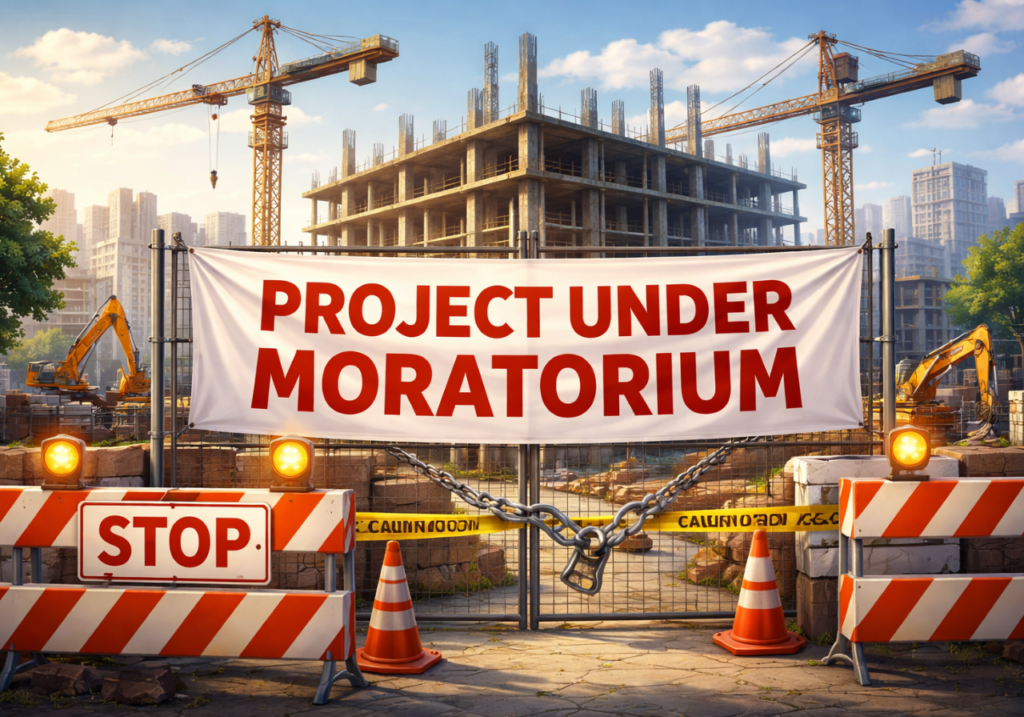
When a real estate project goes under moratorium, it usually occurs due to insolvency proceedings initiated against the builder or developer under the Insolvency and Bankruptcy Code (IBC). During the moratorium period, all legal actions, recovery proceedings, and enforcement measures against the developer are temporarily stayed.
For homebuyers, this means that construction may slow down or stop, and individual lawsuits or recovery actions cannot proceed independently. However, homebuyers are recognized as financial creditors under the IBC and have the right to file claims, participate in the Committee of Creditors, and seek resolution of the project through an approved resolution plan.
A moratorium aims to preserve the project and ensure an orderly resolution, but it also makes timely legal guidance essential to protect buyer interests, assert creditor rights, and pursue the most effective remedy under insolvency law.
Violation of subvention scheme
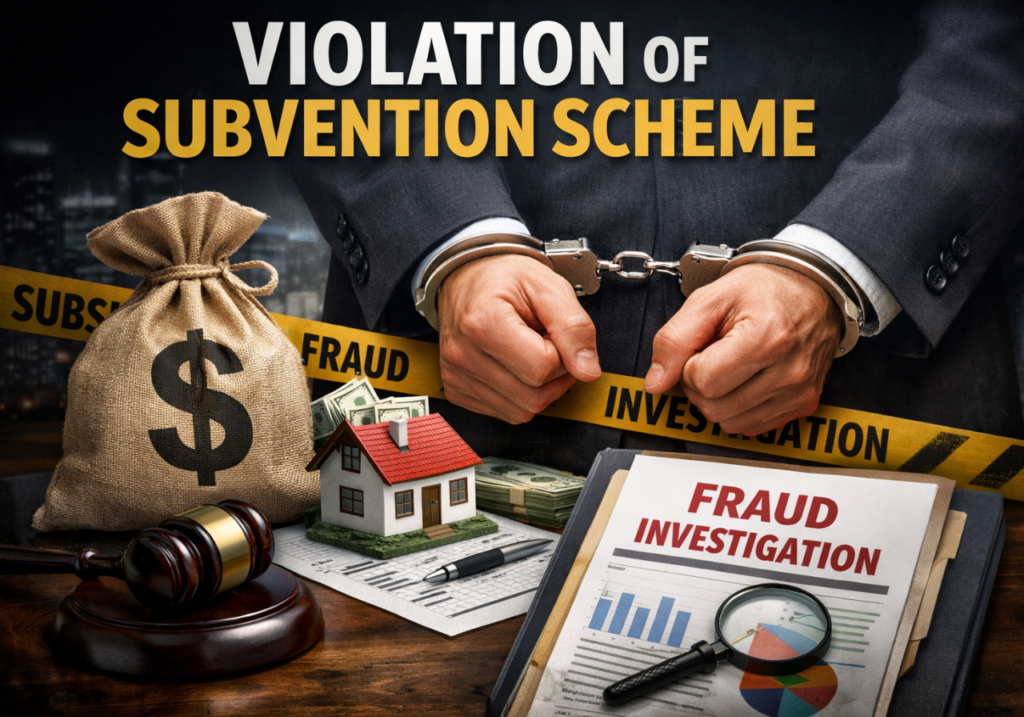
A Subvention Scheme is a real estate payment arrangement where the builder agrees to pay the EMIs on the home loan for a fixed period (or until possession is offered), while the homebuyer pays only a small upfront amount. Such schemes are often promoted as buyer-friendly and low-risk investment options. Violation of a subvention scheme occurs when the builder fails to service the EMIs as promised, delays construction, or diverts funds, causing the loan burden to fall entirely on the homebuyer.
As a result, buyers may face EMI defaults, damaged credit scores, bank recovery actions, and financial distress, despite no fault on their part.
Such violations may amount to breach of contract, deficiency in service, and unfair trade practice, entitling affected buyers to seek legal remedies under RERA, Consumer Protection laws, and Civil or Criminal proceedings. Prompt legal action is crucial to safeguard homebuyer rights and hold builders accountable for subvention scheme violations.
Unilateral cancellation of allotment
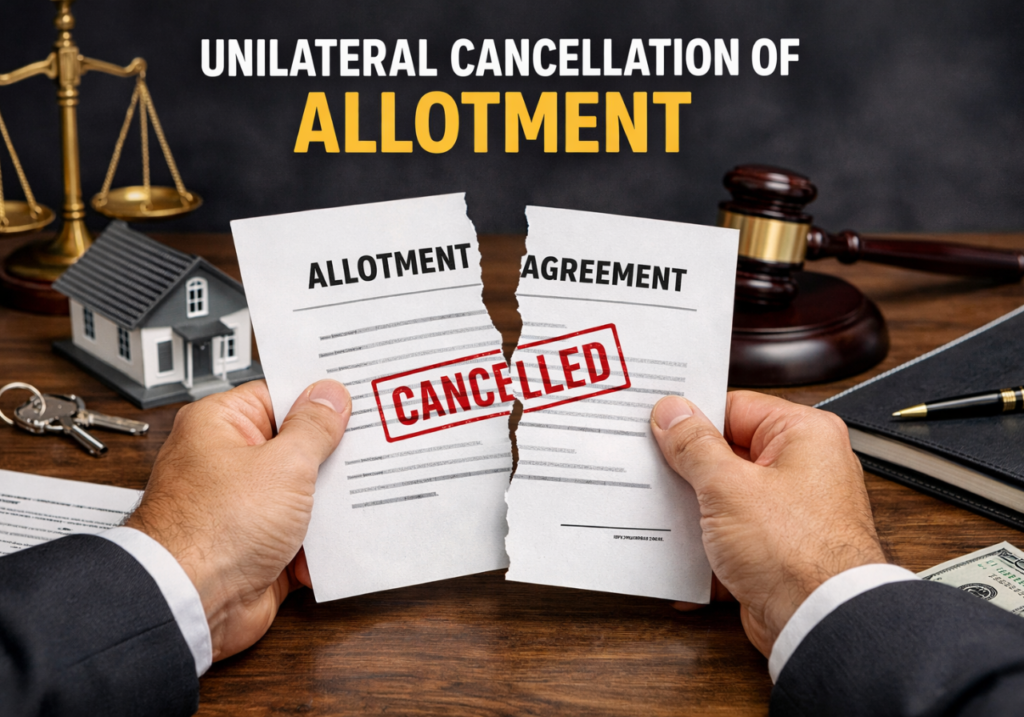
Wrongful cancellation of allotment occurs when a builder unilaterally cancels a flat allotment despite the homebuyer having complied with the payment terms or homebuyer not complying with certain terms on account of some default by the builder and other contractual obligations. Such cancellations are often carried out on arbitrary grounds, delayed demands, or technical defaults, with the intention of reselling the property at a higher price.
Under applicable real estate and consumer laws, including RERA, builders cannot cancel allotments without valid reasons, due process, and proper notice. Arbitrary cancellation may amount to breach of contract, deficiency in service, and unfair trade practice, giving homebuyers the right to seek restoration of allotment, possession, refund with interest, and compensation.
Timely legal intervention is essential to protect buyer rights, prevent unlawful cancellations, and ensure accountability of builders.